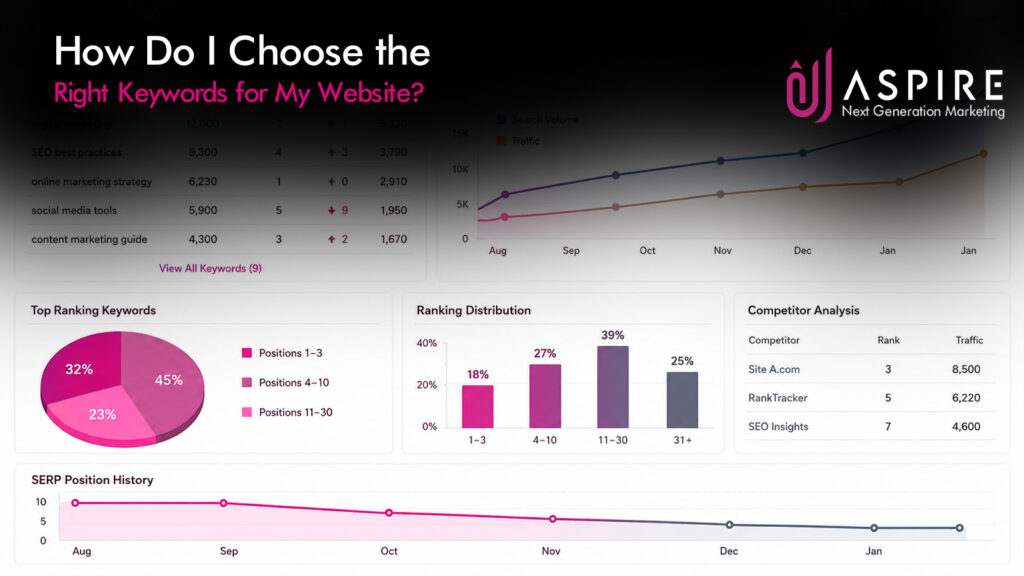

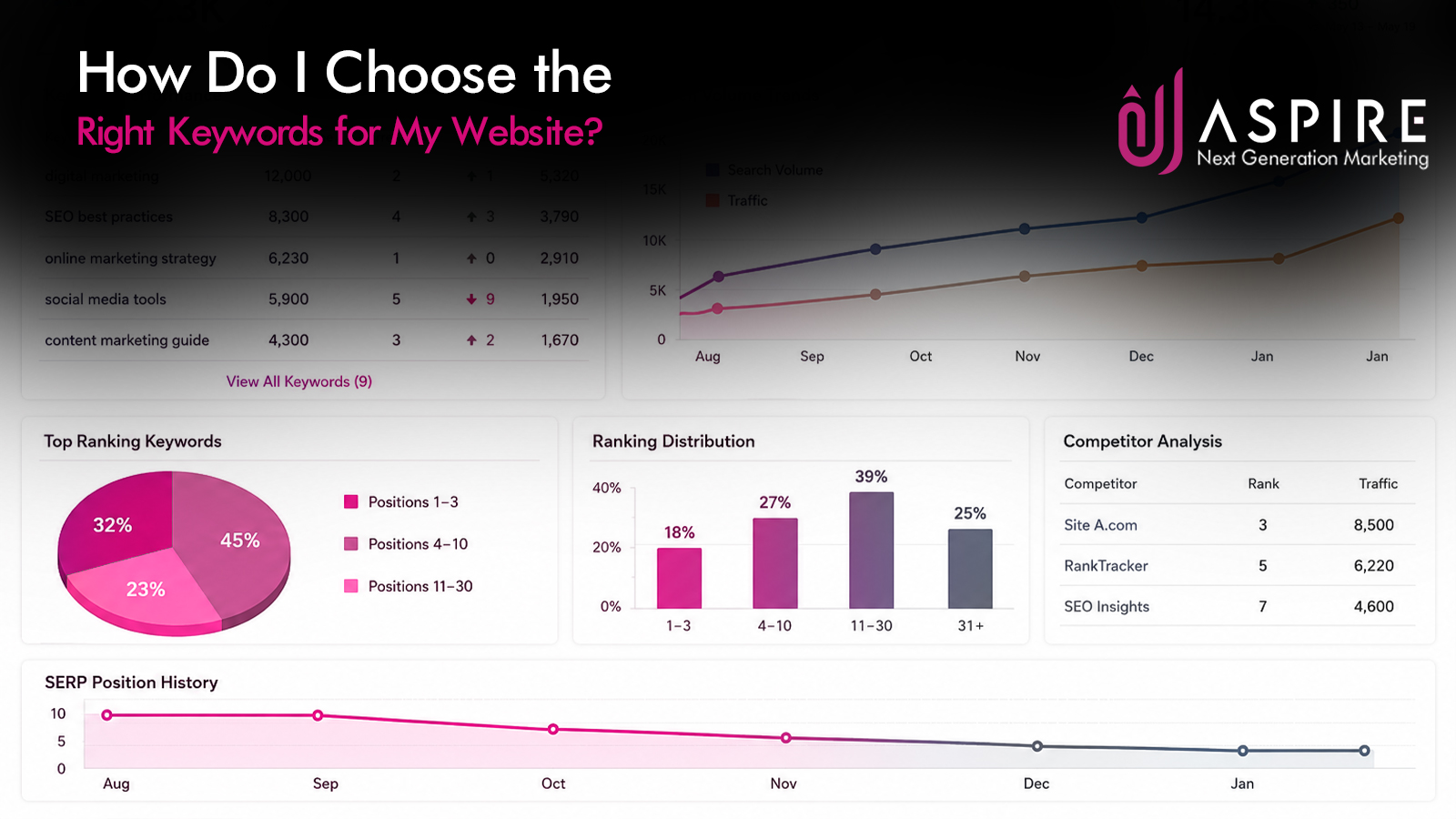
How Do I Choose the Right Keywords for My Website?
Keywords are the compass needles of SEO. Choose the right ones, and your website sails toward people already searching for your products or services. Choose poorly, and even brilliant content drifts through the internet fog unnoticed.
For businesses aiming to improve online visibility, keyword research is the foundation of every successful SEO strategy. Whether you run an e-commerce store, a local business, or a service-based company like Aspire Digital Media, understanding how to choose the right keywords can directly impact traffic, leads, and conversions.
Why Keyword Selection Matters
The keywords you target influence:
- Your search engine rankings
- The quality of website traffic
- Conversion rates and ROI
- Audience targeting accuracy
- Long-term organic growth
- Brand visibility online
Without keyword research, you risk creating content nobody is searching for. Keywords bridge the gap between your business and your ideal customers.
Step 1: Understand Your Core Topics
Start by identifying the main topics related to your business.
Ask yourself:
- What products or services do I offer?
- What problems do customers want solved?
- What phrases would customers search?
- Which industries or locations do I serve?
- What common questions do customers ask?
For example, a digital marketing agency may focus on terms like:
- SEO services
- Social media marketing
- Content creation
- Website optimization
- Brand strategy
This creates the foundation for your keyword strategy.
Step 2: Use Keyword Research Tools
Keyword tools help validate ideas using real search data.
Popular tools include:
- Google Keyword Planner
- Ahrefs
- SEMrush
- Moz Keyword Explorer
- Ubersuggest
- Google Trends
- Answer the Public
These tools show:
- Monthly search volume
- Keyword difficulty
- Search trends
- Competitor rankings
- Related keyword ideas
Using multiple tools gives a clearer picture of keyword opportunities.
Step 3: Analyze Search Volume and Competition
When learning how to choose the right keywords for your website, two metrics matter most:
Search Volume
This shows how many people search for a keyword monthly.
- High volume: More traffic potential but highly competitive
- Medium volume: Balanced opportunity
- Low volume: Easier to rank for and often more targeted
Keyword Difficulty
This measures how hard it is to rank for a keyword.
A smart strategy combines:
- Easy keywords for quick wins
- Medium keywords for steady growth
- Competitive keywords for long-term authority
The goal is balance, not just chasing massive traffic numbers.
Step 4: Understand Search Intent
Search intent reveals why users are searching.
Informational Intent
Users want answers or education.
Example: “What is SEO?”
Commercial Intent
Users compare options before buying.
Example: “Best digital marketing agency”
Transactional Intent
Users are ready to take action.
Example: “Hire SEO agency near me”
Matching your content to search intent improves both rankings and conversions.
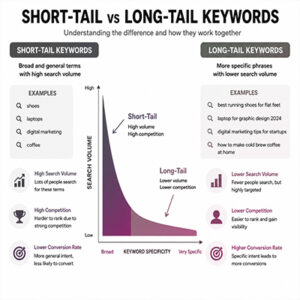
Step 5: Focus on Long-Tail Keywords
Long-tail keywords are longer, more specific phrases.
Examples:
- “SEO services for small businesses”
- “Best social media strategy for startups”
- “Affordable website optimization services”
Why they matter:
- Lower competition
- Higher conversion rates
- More targeted traffic
- Faster ranking opportunities
For newer websites, long-tail keywords are often the golden staircase into organic traffic.
Step 6: Analyze Competitors
Competitor research helps uncover keyword gaps and opportunities.
Study:
- Keywords competitors rank for
- Content formats they use
- Weak areas you can outperform
- Untapped local or niche keywords
Tools like Ahrefs and SEMrush make competitor analysis easier and more data-driven.
Step 7: Build a Keyword Strategy
Organize keywords into categories:
Seed Keywords
Core business terms that define your services or products.
Example: “Digital marketing services”
Topic Clusters
Related keyword groups connected to your main topic.
Example: SEO, social media marketing, content creation, paid advertising
Long-Tail Keywords
Specific phrases with lower competition and higher conversion potential.
Example: “SEO services for fashion brands”
Local Keywords
Location-based keywords for targeting nearby audiences.
Example: “Digital marketing agency in Kolkata”
Commercial Keywords
Keywords used by people researching before purchasing.
Example: “Best SEO agency for startups”
Educational Keywords
Informational search queries that help attract audiences through blogs and guides.
Example: “How to improve website traffic organically”
A structured keyword map keeps content organized and prevents keyword overlap.
Step 8: Monitor and Improve
SEO is never “set and forget.” Search trends evolve constantly.
Track regularly:
- Keyword rankings
- Organic traffic
- Conversion rates
- Click-through rates
- New keyword opportunities
Use tools like Google Search Console and Google Analytics to refine your strategy over time.
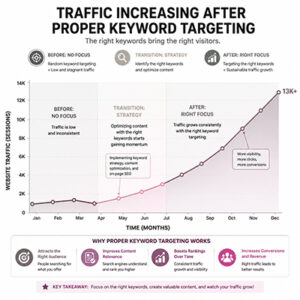
Common Keyword Mistakes to Avoid
Avoid these SEO potholes
- Targeting only high-volume keywords
- Ignoring search intent
- Keyword stuffing
- Neglecting long-tail opportunities
- Creating duplicate keyword targets
- Failing to monitor performance
- Choosing irrelevant keywords
The best keywords are not always the biggest. They are the ones most relevant to your audience and business goals.
Why Businesses Choose Aspire Digital Media
Aspire Digital Media helps businesses create data-driven keyword strategies that improve visibility, attract qualified traffic, and boost conversions. By combining SEO research, competitor analysis, and audience insights, they help brands target keywords that generate real business growth instead of vanity traffic.
FAQs
Focus on 1 primary keyword and 2-3 related long-tail keywords per page. More than that dilutes your message and confuses search engines.
Quality over quantity. Ranking for 10 highly relevant keywords that drive sales beats ranking for 100 irrelevant keywords with no conversions.
Typically 3-6 months for competitive keywords, though long-tail keywords can rank in 4-8 weeks. Consistency and quality content matter most.
Yes, but naturally. Include primary keywords in URLs, page titles, and meta descriptions, but prioritize readability for human visitors first.
No this causes internal competition and "cannibalization." Assign one primary keyword per page and use related variations on different pages.