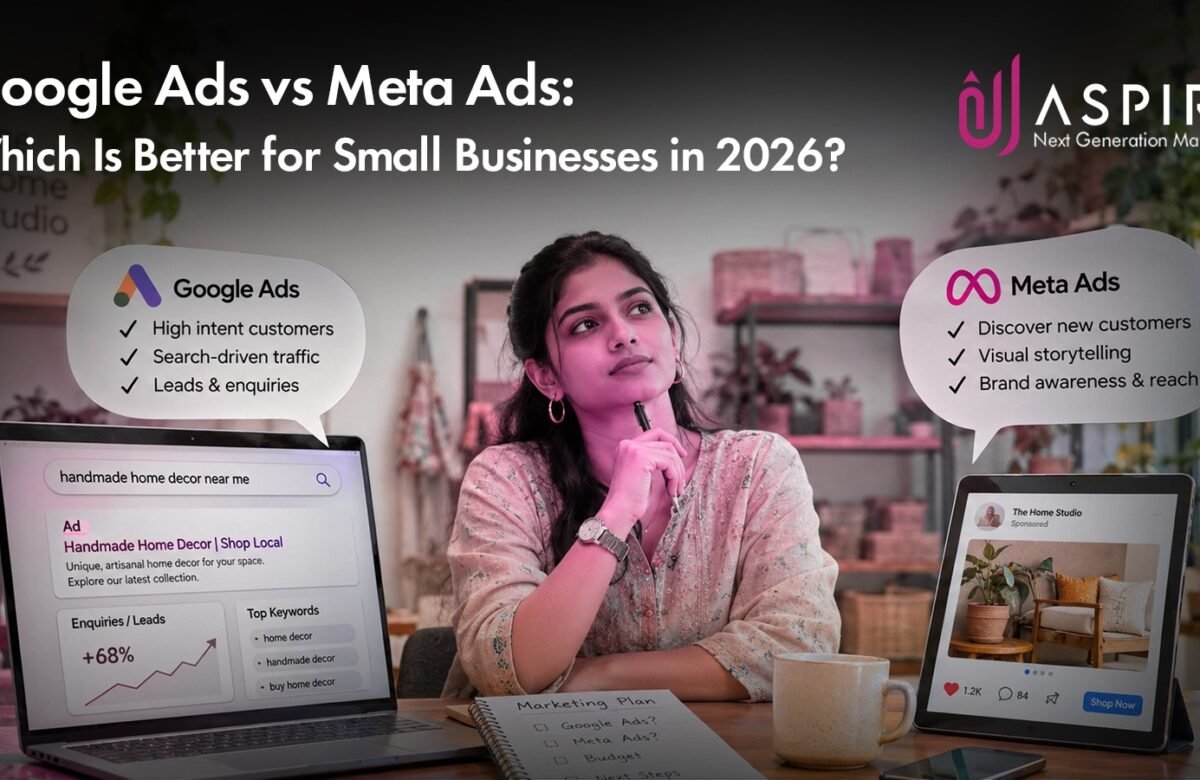

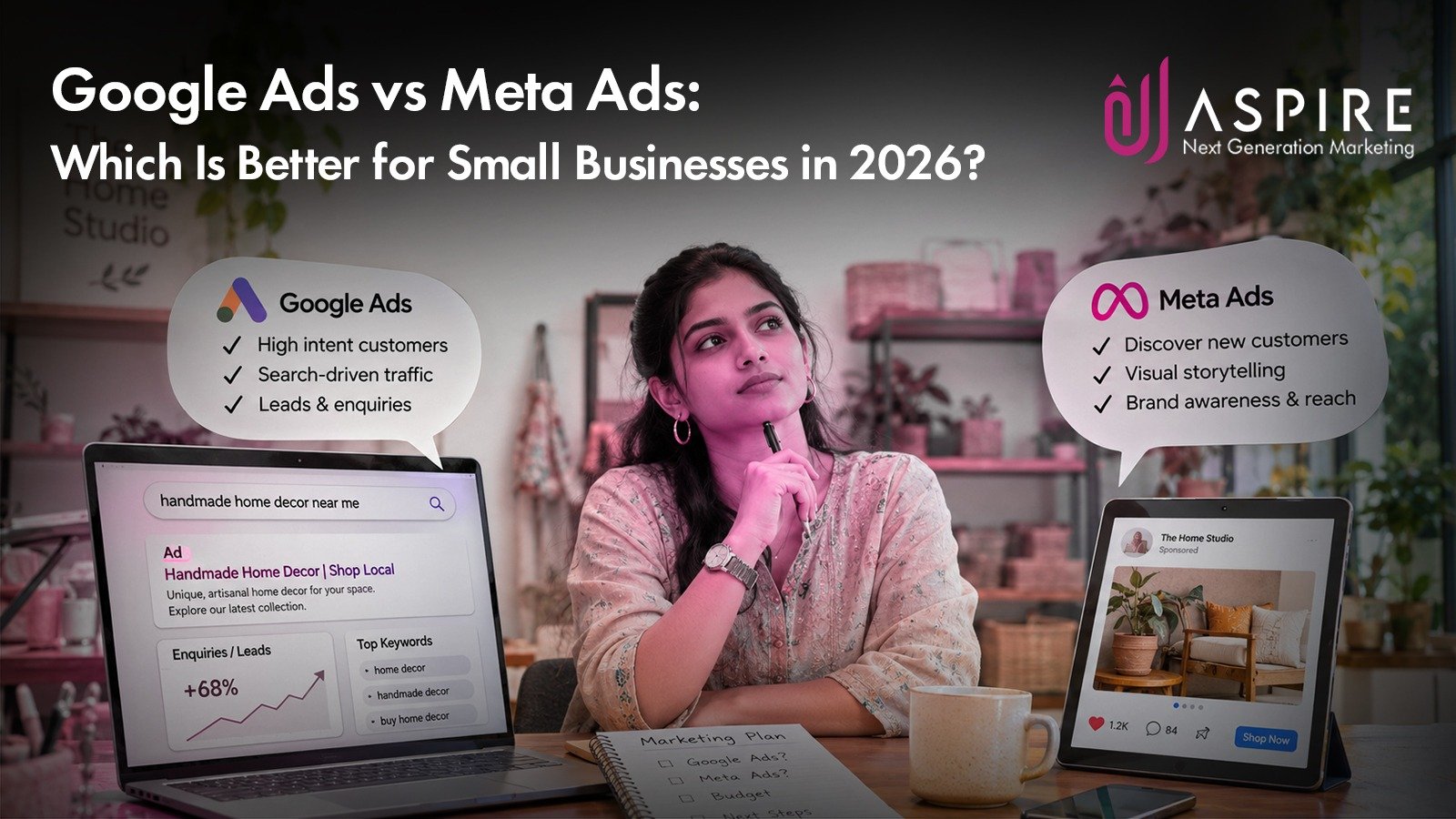
Google Ads vs Meta Ads: Which Is Better for Small Businesses in 2026?
Most small business owners reach the same point sooner or later. The phone goes quiet, enquiries slow down, and someone suggests running ads. Then the questions start. Should the effort go into search or social? Google Ads vs Meta Ads is the debate we hear most often from clients, and it deserves a straight answer rather than a sales pitch. Both platforms can bring customers. They just reach them at very different moments.
How each platform finds customers
Google Ads works on intent. Someone types “emergency plumber near me” or searches for a specific software tool, and your ad appears because they already want something. That moment matters, since the person is actively looking and ready to compare options.
- Shows your ad against the words people type into Google Search
- Suits service businesses such as clinics, repair services, coaching centres and agencies
- Lets you target by location, device and time of day
- Extends to Display and YouTube and Performance Max can place ads across Google’s inventory automatically
Meta Ads, which run across Facebook and Instagram, work on interest. Most people on these apps are not searching for your product. The platforms use behaviour, interests and profile details to show your ad to people who may not know they need you yet. Here, the job is to create demand and build familiarity.
- Reaches people while they scroll through feeds, reels and stories
- Works well for visual products like fashion, food, home décor and education
- Offers audience controls based on age, location, interests and past engagement
- Lets you retarget people who visited your website or interacted with your page
Google Ads vs Meta Ads: the practical differences
When you line up Google Ads vs Meta Ads side by side, the differences show up in a few specific places.
- Intent: Google Ads catches people who are already searching. Meta Ads interrupts people who are browsing.
- Creative: Google Ads depends on clear, specific text in headlines and descriptions. Meta Ads depends on strong images, short videos and a hook in the first few seconds.
- Speed: Google Ads often brings enquiries sooner when demand already exists. Meta Ads usually needs a few weeks of testing before results settle.
- Measurement: Both platforms report conversions, but they count them differently, so compare results against your own enquiry or sales records.
- Keyword control: Google Ads lets you exclude irrelevant search terms with negative keywords. Meta Ads relies more on audience signals and creative performance.
Creative that suits each platform
On Google, the words do most of the work. Headlines should match the exact problem a searcher typed, and descriptions should answer the next question they are likely to have.
On Meta, the first three seconds decide a lot. Vertical video, clear faces and a bold opening line tend to earn more attention than a static banner with a long paragraph.
Industries where each platform tends to perform better
Good fits for Google Ads:
- Local service providers that customers need urgently
- B2B companies with longer sales cycles and specific search queries
- Education and training providers, where students compare courses online
Good fits for Meta Ads:
- Consumer brands with a product people can see and want to try
- Restaurants, cafes and food producers that rely on local discovery
- Businesses launching a new product or entering a market where people don’t yet know the brand
These are tendencies rather than rules. A well-built campaign can work on either platform.
Measuring which platform is working
Comparing the two platforms fairly means tracking the same outcome on both. Enquiries, booked appointments or completed orders tell you far more than likes or clicks.
- Set up conversion tracking on your website before the first campaign goes live
- Run each platform in its own campaign so the data stays clean
- Ask new leads where they heard about you, and record the answer in your enquiry sheet or CRM
- Review results every two to four weeks rather than every day
Which one should a small business choose?
Choosing between Google Ads vs Meta Ads starts with one question: are people already searching for what you sell? If they are, a search is usually the stronger first step. If they are not, or if your offer takes some explaining, social platforms give you more room to introduce it.
- Choose Google Ads first if your customers describe their problem in search terms and need a fast answer
- Choose Meta Ads first if your product is visual, impulse-driven or new to the market
- Choose both only when your website, enquiry handling and tracking are ready for two channels
For many owners, sequencing matters more than picking one forever. Run a single channel carefully for a few months, study which efforts bring real enquiries, then add the second channel using what you’ve learned.
What to prepare before launching either campaign
- A landing page that matches the promise of the ad and loads quickly on mobile
- Conversion tracking is connected to your analytics, so you can see which ad produced a lead
- A clear enquiry process, with someone responding quickly during working hours
- Two or three versions of your creative or ad copy to test against each other
Mistakes that quietly drain small business campaigns
- Sending ad traffic to a homepage that doesn’t explain the offer
- Judging performance after two or three days, before the platform has enough data
- Using broad search terms on Google without negative keywords to filter out waste
- Changing creatives and audience settings every day, which keeps resetting progress
- Ignoring how the ad looks on a phone, where most viewing happens
How Aspire Digital Media can help
Aspire Digital Media is a digital media agency that plans, creates and manages paid campaigns across Google and Meta. We build the ad creative, set up the tracking and connect each campaign to a page designed to convert, so you can see which channel brings real enquiries. If you’re considering online advertising for the first time, or your current campaigns feel hard to read, we can review your options with you and suggest a sensible starting point.
Ready to find out which platform fits your business? Talk to the Aspire Digital Media team and get a campaign plan built around your goals.
FAQs
If people already search for your service, start with Google Ads. If you are introducing something new, Meta Ads gives you more room to build awareness.
Facebook and Instagram share Meta’s ad system, so setup and reporting are similar. The real question is whether your customers are searching for you, which points back to Google.
Google Ads can bring enquiries within days if demand already exists. Meta Ads often needs several weeks of testing before performance becomes steady.
In most cases, yes. A landing page or working contact form matters more than the ad itself, because a click is only as useful as the page it leads to.
It can, but most small teams do better starting with one. Track each platform separately and add the second only when your team can handle the extra enquiries.